
Abu Simbel Temples in Egypt – Complete Travel Guide
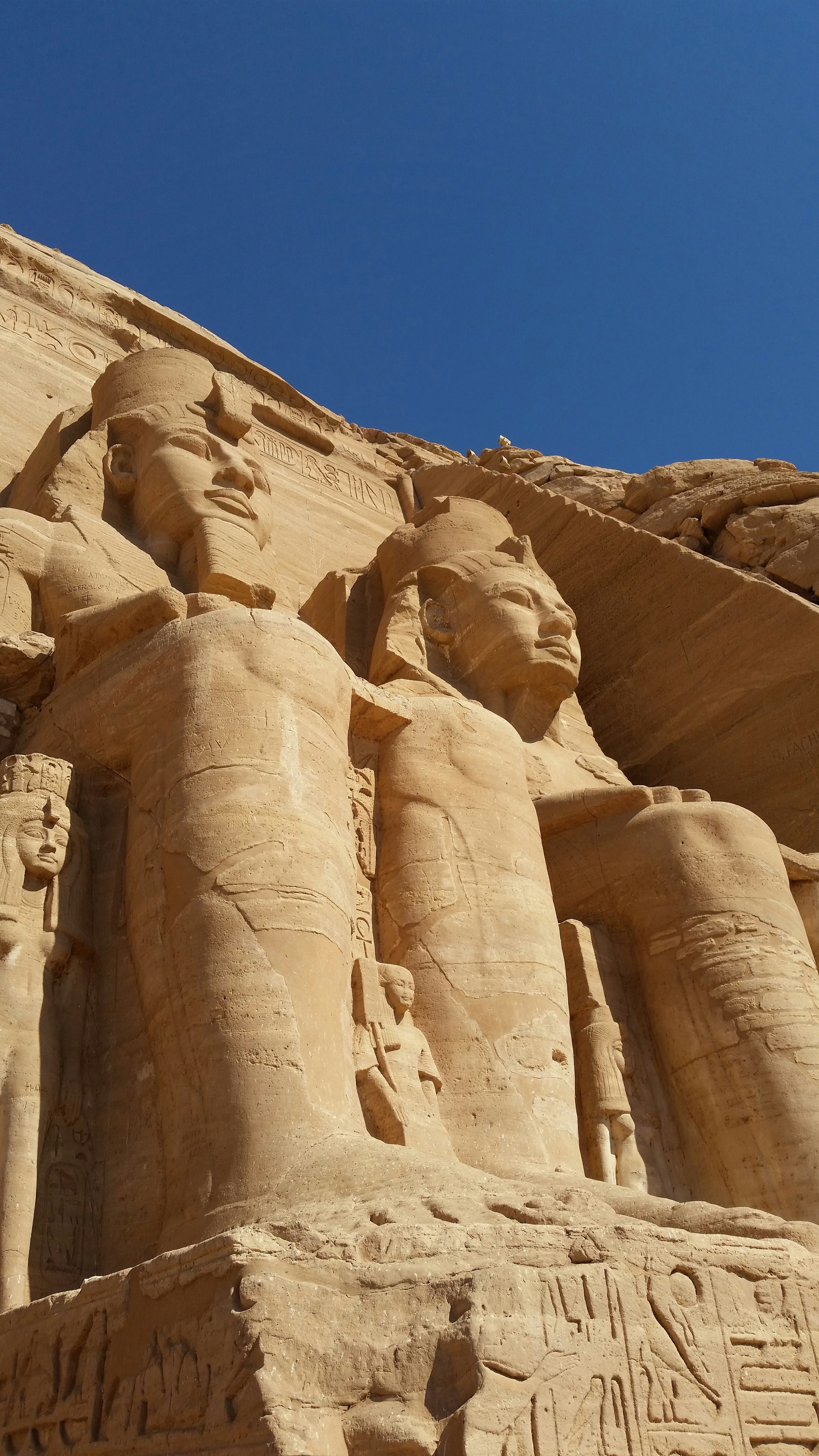
Abu Simbel Temple: One of Egypt’s Greatest Ancient Wonders
Deep in southern Egypt, near the border with Sudan, stand two of the most spectacular monuments of ancient Egypt: the Abu Simbel Temples. Carved directly into the rock during the reign of Pharaoh Ramesses II, these extraordinary temples combine monumental architecture, religious symbolism and remarkable ancient engineering.
Located in Nubia on the western bank of Lake Nasser, Abu Simbel is part of the Nubian Monuments from Abu Simbel to Philae, which UNESCO added to the World Heritage List in 1979. For travelers exploring southern Egypt, an Abu Simbel tour from Aswan is one of the most memorable experiences you can add to an Egypt itinerary.
Where Is Abu Simbel?
Abu Simbel is located in Egypt's Aswan Governorate, in the Nubian region of southern Egypt, approximately 290 km south of Aswan according to the Egyptian Ministry of Tourism and Antiquities.
The temples stand close to the western shore of Lake Nasser, the enormous reservoir created following the construction of the Aswan High Dam.
Its remote location is part of the attraction. The journey south takes visitors away from the major cities and into a landscape associated with ancient Nubia.
Who Built the Temples of Abu Simbel?
The temples were commissioned by Ramesses II, one of the most famous pharaohs of ancient Egypt.
The Great Temple was carved into the rock during the 19th Dynasty, around the 13th century BCE. The Egyptian Ministry of Tourism and Antiquities dates its construction to approximately 1264 BC.
Ramesses II built the monuments not only as places of worship but also as powerful statements of royal authority and religious devotion.
The Great Temple was dedicated to:
Amun-Ra
Ra-Horakhty
Ptah
The deified Ramesses II
The nearby smaller temple was dedicated to the goddess Hathor and Queen Nefertari, Ramesses II's Great Royal Wife.
The Great Temple of Ramesses II
The Great Temple of Abu Simbel is the larger and more famous of the two temples.
Its façade is dominated by four enormous seated statues of Ramesses II, creating one of the most recognizable archaeological scenes in Egypt.
Each statue represents the pharaoh in an imposing seated position, emphasizing his royal status and power. One of the colossal statues was damaged by an ancient earthquake, and its fallen fragments remain visible near the entrance.
Egyptian Monuments
Inside the temple, visitors pass through enormous halls decorated with reliefs and inscriptions before reaching the sanctuary.
The interior contains representations of the gods associated with the temple, including the deified Ramesses II.
Egyptian Monuments
The Temple of Queen Nefertari
Standing beside the Great Temple is the Small Temple of Abu Simbel, dedicated to the goddess Hathor and Queen Nefertari.
One of its most remarkable features is the way Nefertari is represented alongside Ramesses II.
The statues of the queen on the façade are depicted at a size comparable to those of the king. This is particularly unusual in ancient Egyptian royal monumental art, where representations of queens were commonly smaller than those of their husbands.
The temple provides an important insight into the religious and royal role of Nefertari during the reign of Ramesses II.
The Incredible Abu Simbel Sun Alignment
One of the most fascinating features of Abu Simbel is its famous solar alignment.
Twice each year, sunlight enters the Great Temple and travels through the interior toward the sanctuary.
According to Egypt's Ministry of Tourism and Antiquities, this phenomenon occurs on 22 February and 22 October, when the sun's rays illuminate several of the sanctuary's statues.
The phenomenon demonstrates the sophisticated understanding of astronomy, architecture and solar movement possessed by the ancient Egyptians.
These dates also attract visitors who want to experience this extraordinary event in person.
How Abu Simbel Was Saved From the Waters?
The story of Abu Simbel does not end in ancient Egypt.
During the construction of the Aswan High Dam, the rising waters of Lake Nasser threatened to submerge the temples.
An enormous international preservation campaign, led by UNESCO, was launched to save the monuments.
The temples were carefully dismantled into sections and reconstructed at a higher location. UNESCO records that the Abu Simbel complex was moved during the international campaign between 1960 and 1980, with the temples reconstructed approximately 64 meters above their original location and 180 meters inland.
The temples were inaugurated at their new location in 1968.
This remarkable rescue operation is considered one of the great achievements in modern archaeological conservation.
Abu Simbel and UNESCO World Heritage
The temples form part of the Nubian Monuments from Abu Simbel to Philae, a UNESCO World Heritage property.
The property includes important archaeological sites extending through the Nile Valley between Abu Simbel and Aswan. It was inscribed on the World Heritage List in 1979.
The international campaign to save the Nubian monuments became an important milestone in the development of international heritage preservation.
How to Visit Abu Simbel
Most travelers visit Abu Simbel as part of an itinerary based in Aswan.
Abu Simbel by road
A private vehicle or organized excursion from Aswan is a popular way to visit the temples. This option allows travelers to arrange their departure time and sightseeing schedule.
Abu Simbel by flight
Travelers with limited time can also consider flying between Aswan and Abu Simbel, subject to the current flight schedule.
Abu Simbel as part of a Nile cruise itinerary
If you're taking a Nile cruise between Aswan and Luxor, Abu Simbel can be added before or after the cruise depending on your schedule.
For travelers interested in ancient Egyptian history, combining Aswan, Philae Temple and Abu Simbel creates a particularly rewarding southern Egypt itinerary.
What to See at Abu Simbel
During your visit, make time for both temples.
1. The Great Temple
Admire the four colossal statues of Ramesses II and explore the decorated interior.
2. The Small Temple
Visit the temple dedicated to Hathor and Nefertari and see its impressive royal statues.
3. The Sanctuary
Look closely at the religious imagery and statues at the deepest part of the Great Temple.
4. The Temple Facades
The monumental façades provide some of the best photography opportunities at Abu Simbel.
5. The Lake Nasser Landscape
The temples' setting beside Lake Nasser adds another dimension to the experience.
Abu Simbel Opening Hours and Tickets
The Egyptian Ministry of Tourism and Antiquities currently lists Abu Simbel's opening hours as 6:00 AM to 5:00 PM. Its current online information also lists different ticket prices for foreign visitors, Egyptian visitors and the special solar-alignment dates.
Because ticket prices and regulations can change, travelers should check the official Egyptian antiquities information before their visit.
Why Abu Simbel Should Be on Your Egypt Itinerary ?
Abu Simbel is much more than two ancient temples.
It tells several stories at once: the ambition of Ramesses II, the religious beliefs of ancient Egypt, the extraordinary engineering abilities of ancient architects, the history of Nubia, and one of the largest international archaeological rescue projects ever undertaken.
Standing before the colossal statues of Ramesses II is an experience that puts the enormous scale of ancient Egyptian civilization into perspective.
Frequently Asked Questions About Abu Simbel
Is Abu Simbel worth visiting?
For travelers interested in ancient Egyptian history, architecture and archaeology, Abu Simbel offers the opportunity to see two exceptionally preserved rock-cut temples associated with Ramesses II and Nefertari.
How far is Abu Simbel from Aswan?
Abu Simbel is approximately 290 km south of Aswan, according to the Egyptian Ministry of Tourism and Antiquities.
Egyptian Monuments
Who built Abu Simbel?
The temples were commissioned by Ramesses II during Egypt's 19th Dynasty.
Egyptian Monuments
What are the two temples at Abu Simbel?
They are the Great Temple of Ramesses II and the Small Temple dedicated to Hathor and Queen Nefertari.
When does the Abu Simbel Sun Festival occur?
The famous solar alignment occurs on 22 February and 22 October, according to Egypt's Ministry of Tourism and Antiquities.
Egyptian Monuments
Was Abu Simbel moved?
Yes. The temples were relocated in the 1960s to protect them from the rising waters created by the Aswan High Dam. The reconstructed temples were inaugurated at their new location in 1968.
Can I visit Abu Simbel from Aswan?
Yes. Abu Simbel can be visited from Aswan by road, and air travel may also be available depending on current schedules.
Plan Your Abu Simbel Experience
Whether you're exploring Egypt on a Nile cruise, staying in Aswan, or planning a longer Egypt adventure, Abu Simbel deserves a place on your itinerary.
From the colossal statues of Ramesses II to the elegant temple of Nefertari and the remarkable story of its modern-day rescue, Abu Simbel is one of the places where ancient Egyptian history feels truly alive.
Comments
Leave a comment