Ancient Egyptian Astronomy: Stars and the Calendar
Introduction
Long before modern telescopes and scientific observatories existed, the ancient Egyptians looked to the sky to understand the world around them. By observing the Sun, Moon, stars, and changing seasons, they developed a sophisticated understanding of time that helped shape their agricultural calendar, religious festivals, and daily life.
Ancient Egyptian astronomy was closely connected to the Nile River, the movement of celestial bodies, and the religious beliefs of Egyptian civilization. The stars were not simply distant points of light; they were associated with gods, the afterlife, and the eternal cycle of life and death.
Today, visitors exploring the temples and tombs of Luxor, Karnak, and Dendera can still discover fascinating evidence of this ancient relationship between the heavens and life on Earth.
Whether you are passionate about history, planning a trip to Egypt, or curious about how ancient civilizations understood the universe, the story of Egyptian astronomy offers a remarkable journey into the scientific and spiritual world of the pharaohs.
1. Why Was Astronomy Important in Ancient Egypt?
Astronomy played several important roles in ancient Egyptian society. Observing the sky helped people organize agricultural activities, establish a calendar, determine important religious dates, and connect royal and religious life with the heavens.
One of the most important events in the Egyptian year was the annual flooding of the Nile. For thousands of years, this flood deposited fertile soil across agricultural land, supporting farming and the growth of Egyptian civilization.
The appearance of Sirius, the brightest star in the night sky, became particularly significant because its annual return to the dawn sky occurred around the time of the Nile's rising in many historical periods. This observation helped connect the movement of the stars with the agricultural cycle.
Egyptian priests and temple specialists carefully observed celestial patterns. Their knowledge helped maintain calendars and schedule religious ceremonies, while their observations contributed to the development of one of the ancient world's most influential systems of timekeeping.
Astronomy was therefore both practical and sacred. It helped Egyptians understand when to plant crops and celebrate festivals, while also reinforcing their belief that the heavens reflected divine order.
2. The Ancient Egyptian Calendar: A Remarkable Achievement
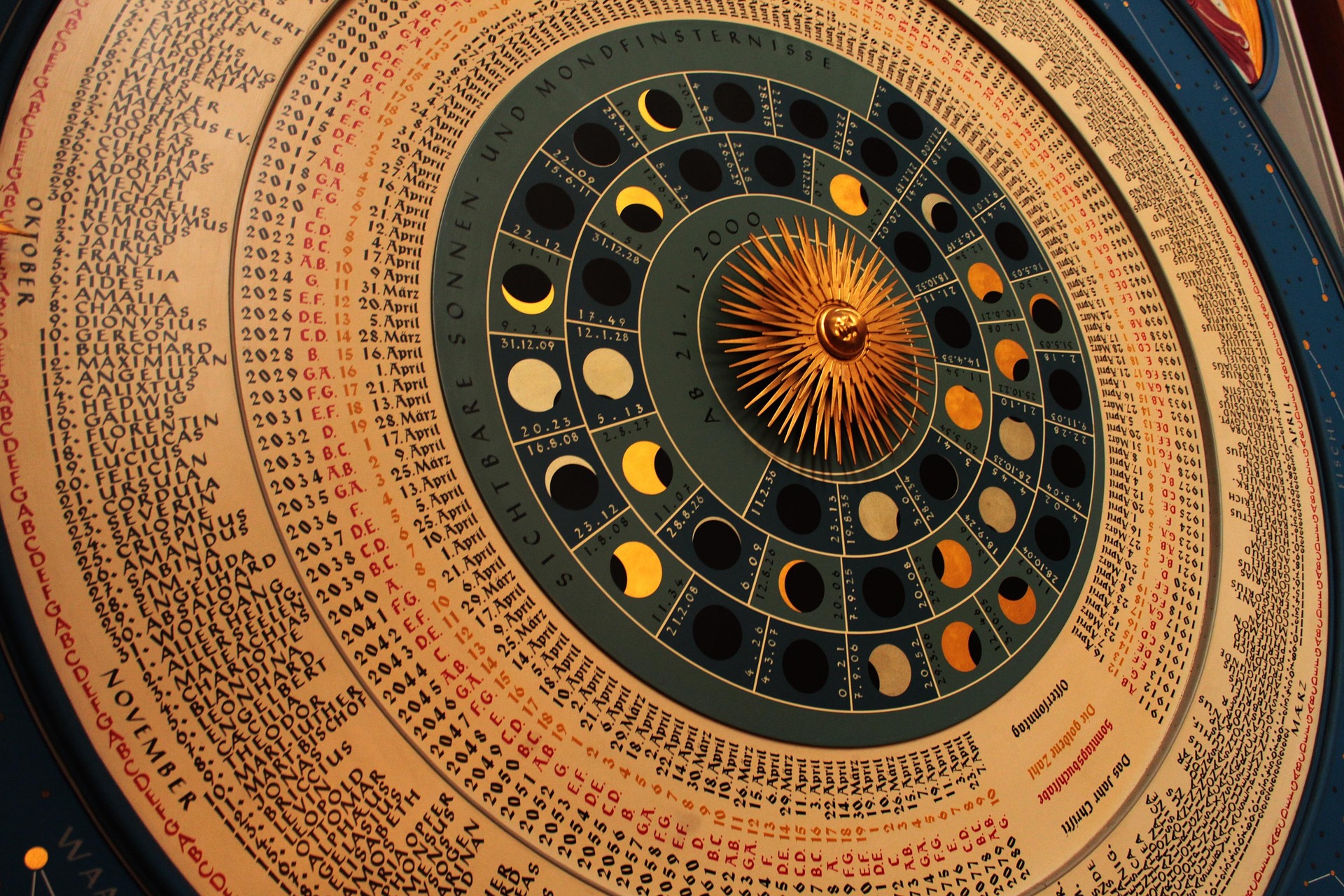
The ancient Egyptian civil calendar was based on a year of 365 days. It consisted of 12 months, each containing 30 days, followed by five additional days known as the epagomenal days.
These five extra days were associated with the birthdays of important deities in Egyptian mythology.
The calendar was organized into three main seasons:
Akhet: The Season of Inundation
Akhet was traditionally associated with the flooding of the Nile. During this period, water spread across agricultural land, replenishing the soil and supporting the farming cycle.
Peret: The Season of Emergence
Peret was the season when the floodwaters receded and cultivated land became available for planting and crop growth.
Shemu: The Season of Harvest
Shemu was associated with harvesting crops and gathering agricultural produce before the next flooding cycle.
Each season contained four months, giving the calendar a straightforward structure that was useful for administration, agriculture, and religious life.
However, the civil calendar did not include a leap day. Because the actual solar year is approximately 365.2422 days long, the calendar gradually shifted relative to the seasons over time.
Despite this limitation, the 365-day system was a remarkable achievement that helped organize Egyptian society for centuries.
3. Sirius: The Star That Helped Mark the Egyptian Year
Sirius, known in ancient Egyptian religious tradition as Sopdet, held a special place in Egyptian astronomy.
Its heliacal rising occurs when the star becomes visible above the eastern horizon shortly before sunrise after a period of being hidden in the Sun's glare. In ancient Egypt, this event was associated with the beginning of the annual agricultural cycle and the approaching inundation of the Nile.
The timing of Sirius's appearance varied according to the observer's location and the historical period. Its relationship with the Nile flood was significant, although the two events did not always occur on precisely the same date.
Sopdet was also associated with fertility, renewal, and the cycles of nature. The star's return to the dawn sky symbolized continuity and the renewal of life.
For ancient observers, watching the heavens provided a way to connect recurring celestial events with changes on Earth. The annual appearance of Sirius became one of the most memorable examples of that relationship.
4. How Did Ancient Egyptians Observe the Stars?
Ancient Egyptian astronomers did not have modern telescopes, digital clocks, or artificial satellites. Instead, they relied on repeated observations of the sky, careful recordkeeping, and practical instruments.
Their methods included:
- Observing the positions and movements of stars throughout the year.
- Recording the appearances of particular stars and constellations.
- Using shadows and simple instruments to study the Sun's position.
- Dividing the night into time periods using celestial observations.
- Incorporating astronomical imagery into tombs, temples, and religious texts.
Some ancient Egyptian star charts divided the night into intervals associated with particular stars or star groups. These systems helped priests and other specialists estimate the passage of time during the night.
The Egyptians also developed methods of tracking the Sun's daily movement. Shadow clocks and sundials provided ways to estimate daytime hours, although their accuracy depended on the instrument, location, and season.
Their achievements demonstrate that careful observation could produce useful astronomical knowledge long before modern scientific technology existed.
5. The Stars and Ancient Egyptian Religion
For the ancient Egyptians, the sky was filled with divine meaning. Celestial bodies were closely associated with gods, kingship, death, and rebirth.
The Sun god Ra was one of the most important deities in Egyptian religion. His daily journey across the sky symbolized the recurring cycle of light, darkness, and renewal. In many religious traditions, the Sun's journey through the night was also associated with the underworld and the promise of rebirth.
The constellation now known as Orion was associated with Osiris, the god connected with death, resurrection, and the afterlife. The circumpolar stars, which appear to circle the celestial pole without setting below the horizon, were sometimes associated with permanence and eternal existence.
These beliefs influenced royal funerary traditions. Certain pyramid texts and tomb decorations refer to celestial destinations for the deceased king, reflecting the idea that the heavens could be connected with eternal life.
The sky was therefore more than a scientific subject. It formed part of a larger religious worldview in which the movements of celestial bodies reflected the ongoing order of the universe.
6. Dendera Temple: One of Egypt's Most Fascinating Astronomical Monuments
One of the most remarkable places to explore the connection between ancient Egyptian religion and astronomy is the Temple of Hathor at Dendera.
Located north of Luxor, the temple is famous for its impressive architecture, beautifully decorated ceilings, and astronomical imagery.
The temple's famous zodiac relief illustrates how Egyptian religious traditions interacted with astronomical knowledge during the Greco-Roman period of Egyptian history. Its imagery includes zodiacal figures and celestial elements that reflect a mixture of Egyptian and wider Mediterranean astronomical traditions.
The Dendera Zodiac is particularly interesting because it demonstrates that astronomical ideas in Egypt continued to evolve long after the age of the great pyramids.
Visitors can also appreciate the temple's decorated ceilings, religious scenes, and representations of the heavens. These features make Dendera an excellent destination for travelers who want to understand ancient Egyptian culture beyond the most famous monuments.
For anyone interested in astronomy, mythology, and temple symbolism, a visit to Dendera offers a fascinating opportunity to explore how ancient people represented their understanding of the cosmos.
7. Karnak Temple and the Relationship Between Temples and the Sun
Karnak Temple in Luxor is one of the largest religious complexes ever constructed. Developed and expanded by generations of rulers, it was an important center of worship dedicated primarily to Amun and associated deities.
Ancient Egyptian temples were designed according to religious principles that connected architecture, ritual, and the divine world. The orientation of some temples and the relationship between their architectural features and sunlight have attracted considerable scholarly interest.
At Karnak, visitors can explore monumental gateways, towering columns, obelisks, sacred spaces, and inscriptions that reveal the importance of religion in Egyptian civilization.
It is important not to assume that every temple was designed for a single astronomical event. Architectural alignments can be complex, and individual claims require archaeological evidence. Nevertheless, the relationship between solar symbolism, royal power, and religious architecture remains an intriguing subject.
A knowledgeable guide can help visitors distinguish established historical facts from theories and understand the religious meaning of the monuments they see.
8. How Astronomy Influenced Ancient Egyptian Architecture
Astronomical observations influenced several aspects of ancient Egyptian life, including timekeeping, religious symbolism, and the representation of celestial bodies in sacred spaces.
Egyptian monuments often incorporated imagery of stars, the Sun, and the sky goddess Nut, who was commonly depicted arching over the world. In funerary contexts, star-filled ceilings could represent the heavens and the deceased person's hoped-for place within the cosmic order.
Some royal tombs contain elaborate astronomical ceilings and star charts. These decorations were not merely ornamental; they formed part of the religious landscape surrounding death and rebirth.
The relationship between architecture and astronomy varied across different periods and monuments. Some proposed alignments remain subjects of research and debate, making it important to evaluate each site individually rather than assume that all structures served as astronomical observatories.
Nevertheless, the evidence clearly demonstrates that celestial imagery was important in ancient Egyptian artistic and religious traditions.
9. Did Ancient Egyptian Astronomy Influence Later Civilizations?
Ancient Egypt contributed to the broader history of timekeeping and astronomy through its calendar, administrative traditions, mathematical practices, and accumulated observations.
The 365-day Egyptian civil calendar became important in the administration of the Egyptian state. During the Hellenistic and Roman periods, Egypt also became a center of interaction between Egyptian, Greek, and other intellectual traditions.
Astronomical knowledge developed through exchanges between cultures rather than through the work of a single civilization. Babylonian observations, Greek mathematical astronomy, Egyptian calendar traditions, and later scientific developments all contributed to the history of astronomy.
The Egyptian calendar also influenced later calendar systems. A modified 365-day calendar was used in the Alexandrian tradition, while the ancient Egyptian calendar continued to be important for historical chronology and administrative purposes.
Studying ancient Egyptian astronomy therefore helps us understand not only the achievements of one civilization but also the gradual development of human knowledge across the ancient world.
10. Where Can You Explore Ancient Egyptian Astronomy Today?
Egypt offers several exceptional destinations for travelers interested in astronomy, mythology, and the relationship between ancient architecture and the heavens.
Dendera Temple
Dendera is one of the best destinations for exploring ancient Egyptian astronomical imagery, especially the famous zodiac relief and the temple's decorated ceilings.
Karnak Temple
Karnak provides an opportunity to investigate religious symbolism, monumental architecture, solar imagery, and the role of the temple in ancient Egyptian society.
The Valley of the Kings
Many royal tombs contain elaborate astronomical ceilings, star patterns, and religious texts relating to the Sun's nightly journey and the afterlife.
The Valley of the Queens
The Valley of the Queens includes decorated tombs that reveal important aspects of royal funerary beliefs, including the relationship between religious imagery and the cosmos.
The Egyptian Museum Collections
Museums preserve astronomical objects, inscriptions, tomb fragments, and other artifacts that help researchers reconstruct how ancient Egyptians understood and represented the heavens.
A carefully planned itinerary can combine these historical sites with explanations of the calendar, the gods associated with celestial bodies, and the archaeological evidence behind ancient Egyptian astronomy.
Conclusion: Looking at the Sky Through Ancient Egyptian Eyes
Ancient Egyptian astronomy reveals a civilization that combined practical observation, agricultural knowledge, religious belief, and artistic expression.
By studying the movements of the Sun and stars, the Egyptians developed a 365-day calendar that helped organize agriculture, administration, and religious life. Their observations of Sirius connected the heavens with the Nile's seasonal cycle, while their religious traditions associated celestial bodies with gods, royal power, and the afterlife.
Today, monuments such as Dendera, Karnak, and the royal tombs of Luxor allow visitors to discover these ideas through inscriptions, architectural features, and astronomical imagery.
Exploring Egypt with an understanding of its astronomy transforms a visit from simply seeing ancient monuments into discovering how people understood their place in the universe.
Ready to discover the stories behind Egypt's ancient temples and tombs? Explore Luxor's East and West Bank, uncover the symbolism of Karnak, or plan a memorable excursion to Dendera with a private tour designed around your interests.
The monuments of ancient Egypt have many stories to tell, and the sky is one of the most fascinating places to begin.
Frequently Asked Questions
1. What was ancient Egyptian astronomy?
Ancient Egyptian astronomy involved observing the Sun, Moon, stars, and celestial cycles to organize time, support agriculture, establish religious dates, and interpret the universe through religious beliefs.
2. Did ancient Egyptians invent a 365-day calendar?
The ancient Egyptians developed a civil calendar consisting of 12 months of 30 days plus five additional days, totaling 365 days. Because it did not include a leap day, it gradually shifted relative to the solar year.
3. Why was Sirius important in ancient Egypt?
Sirius, associated with the goddess Sopdet, was important because its annual appearance in the dawn sky was linked with the seasonal cycle and the anticipated flooding of the Nile.
4. What is the Dendera Zodiac?
The Dendera Zodiac is an ancient astronomical relief from the Temple of Hathor at Dendera. It depicts zodiacal and celestial imagery reflecting the interaction of Egyptian and Greco-Roman traditions.
5. Which Egyptian temples are associated with astronomy?
Dendera is particularly famous for its zodiac relief. Karnak and several royal tombs in Luxor also contain religious imagery and architectural features relevant to the study of celestial symbolism.
6. Did ancient Egyptians understand the planets?
Egyptian astronomical traditions included observations of celestial bodies, and surviving evidence shows that planetary phenomena were known in ancient Egypt. However, the extent and mathematical sophistication of Egyptian planetary astronomy varied across periods.
7. Can tourists learn about ancient Egyptian astronomy in Luxor?
Yes. Visitors can explore the astronomical imagery in royal tombs in the Valley of the Kings and examine religious symbolism at Karnak. Dendera is also a valuable excursion for travelers interested in ancient Egyptian astronomy.
8. Is Dendera Temple worth visiting from Luxor?
Dendera is an excellent option for travelers interested in ancient Egyptian religion, temple architecture, and astronomical imagery. It is commonly visited on a day trip from Luxor, subject to travel arrangements and site access.
9. How did astronomy help ancient Egyptian farmers?
Astronomical observations helped Egyptians track recurring seasonal patterns and organize their agricultural calendar. The Nile's flood cycle was especially important, although the timing of the flood and the appearance of Sirius did not always coincide exactly.
10. What is the best way to explore Egypt's astronomical monuments?
A private guided tour can help visitors understand the historical context of temple reliefs, tomb ceilings, and religious symbols while allowing enough time to examine the details of each monument.
Explore Ancient Egypt With a Local Guide
Discover the history, mythology, and remarkable architecture of Luxor with a private tour tailored to your interests. Visit the great temples, explore ancient tombs, and learn how Egyptian civilization connected the Earth with the heavens.
Plan your Egypt adventure today and discover the stories hidden within the monuments of the pharaohs.
Comments
Leave a comment