Egyptian Gods and Goddesses: The Stories Behind the Temples
Discover the fascinating world of ancient Egyptian mythology, where powerful gods, mysterious goddesses, and sacred temples reveal the beliefs that shaped one of the world's greatest civilizations.
Introduction: A World of Gods, Pharaohs, and Sacred Temples
Ancient Egypt was a civilization deeply connected to religion, mythology, and the natural world. For thousands of years, Egyptians believed that gods and goddesses influenced the rising sun, the annual flooding of the Nile, the fertility of the land, the protection of families, and the journey of the soul after death.
These beliefs were reflected in magnificent temples, royal tombs, sacred statues, and colorful wall paintings that still fascinate visitors today. Every temple had its own religious significance, and many were dedicated to particular deities whose stories explained the mysteries of life, death, creation, and the universe.
When you visit Egypt's ancient temples, you are not simply exploring impressive stone monuments. You are entering a world of sacred stories that helped ancient Egyptians understand their place in the cosmos.
From the mighty Amun-Ra at Karnak Temple to the beautiful goddess Hathor at Dendera and the legendary Isis at Philae, the gods and goddesses of ancient Egypt offer a deeper understanding of the country's extraordinary heritage.
1. Amun-Ra: The King of the Gods
Amun-Ra was one of the most important deities in ancient Egyptian religion. His identity developed through the association of Amun, a major god of Thebes, with Ra, the ancient sun god.
Amun was originally associated with hidden or unseen power, while Ra represented the sun and its life-giving energy. Their combination became especially influential as Thebes rose to political and religious prominence.
The magnificent Karnak Temple complex in Luxor became one of the principal centers of worship for Amun-Ra. Pharaohs expanded the complex over many generations, constructing enormous columns, obelisks, courtyards, and sanctuaries to honor the god.
During important religious festivals, sacred statues of the gods were carried in ceremonial processions. One of the most significant was the Beautiful Feast of Opet, which connected Karnak Temple with Luxor Temple and reinforced the religious authority of the pharaoh.
Where to discover his story: Karnak Temple in Luxor, one of the greatest religious complexes of ancient Egypt.
2. Isis: The Goddess of Magic, Motherhood, and Protection
Isis was among the most widely revered goddesses in ancient Egypt. She was associated with magic, motherhood, healing, protection, and devotion.
According to one of the best-known Egyptian myths, Isis was the wife of Osiris and the mother of Horus. After Osiris was killed by his brother Seth, Isis searched for his scattered remains and used her magical powers to restore him sufficiently for the continuation of life beyond death. Their son Horus later challenged Seth, becoming a symbol of rightful kingship.
The story of Isis expressed powerful themes of loyalty, grief, renewal, and the triumph of order over disorder.
The Temple of Isis on the island of Philae, near Aswan, became one of the most important centers of her worship. Its elegant columns, reliefs, and sanctuaries preserve scenes connected with the goddess and her divine family.
The temple complex was relocated to Agilkia Island during an international rescue project to protect it from the rising waters associated with the Aswan High Dam.
Where to discover her story: Philae Temple near Aswan, a remarkable destination for travelers interested in mythology and ancient Egyptian religion.
3. Osiris: The God of the Afterlife and Resurrection
Osiris was associated with the afterlife, regeneration, and the renewal of life. His myth became central to ancient Egyptian beliefs about death and the possibility of existence beyond the grave.
In the traditional story, Osiris ruled Egypt until his brother Seth killed him and attempted to take his place. Isis gathered and restored his remains, while their son Horus eventually fought to avenge his father and establish legitimate kingship.
Osiris became ruler of the realm of the dead and judge of the deceased. Egyptians hoped that after death they would be able to enter a renewed existence, provided they met the religious and moral requirements associated with the afterlife.
The city of Abydos was one of the most important centers of Osiris worship. The Temple of Seti I at Abydos contains remarkable reliefs and inscriptions, while the wider site preserves evidence of the area's long-standing religious importance.
Osiris is often depicted with green or black skin, symbols associated with regeneration and the fertile earth, and with his body wrapped in a form resembling a mummy.
Where to discover his story: Abydos, particularly the Temple of Seti I, which offers an exceptional introduction to royal religion and ancient Egyptian beliefs.
4. Horus: The Falcon God of Kingship
Horus was one of the most recognizable gods of ancient Egypt. Often represented as a falcon or a man with a falcon's head, he was associated with the sky, protection, and royal authority.
In the myth of Osiris, Horus challenged Seth to claim the throne that had belonged to his father. Their struggle represented the conflict between legitimate order and destructive disorder.
The pharaoh was closely associated with Horus during life, while the relationship between the king and Osiris became particularly important in royal funerary beliefs. This connection helped reinforce the pharaoh's role as the guardian of order in Egypt.
One of the finest places to learn about Horus is the Temple of Edfu, located between Luxor and Aswan. Dedicated primarily to Horus of Behdet, the temple is among the best-preserved ancient Egyptian temples.
Its massive entrance pylons, ceremonial courtyards, reliefs, and inscriptions provide valuable information about religious rituals and myths.
Where to discover his story: Edfu Temple, a major highlight of many Nile cruise itineraries.
5. Hathor: The Goddess of Love, Music, and Joy
Hathor was a multifaceted goddess associated with love, beauty, music, dance, motherhood, joy, and the protection of women. She was also connected with the sky and the afterlife.
Artists frequently portrayed her as a woman with cow horns surrounding a sun disk or as a cow. These images expressed her nurturing and protective qualities.
The Temple of Hathor at Dendera is one of Egypt's most impressive surviving temple complexes. Its columns feature distinctive Hathor-headed capitals, while its ceilings preserve astronomical decorations and richly colored scenes.
The famous Dendera Zodiac, now displayed in the Louvre in Paris, originated from the temple complex. The original astronomical ceiling is an important example of the relationship between Egyptian religious traditions and later astronomical influences.
Hathor was also connected with music and celebration. Her worship reminds us that ancient Egyptian religion was not concerned only with death and royal power; it also embraced beauty, pleasure, family, and the enjoyment of life.
Where to discover her story: Dendera Temple, an excellent destination for travelers exploring the religious and artistic traditions of ancient Egypt.
6. Anubis: The Guardian of Mummification and Tombs
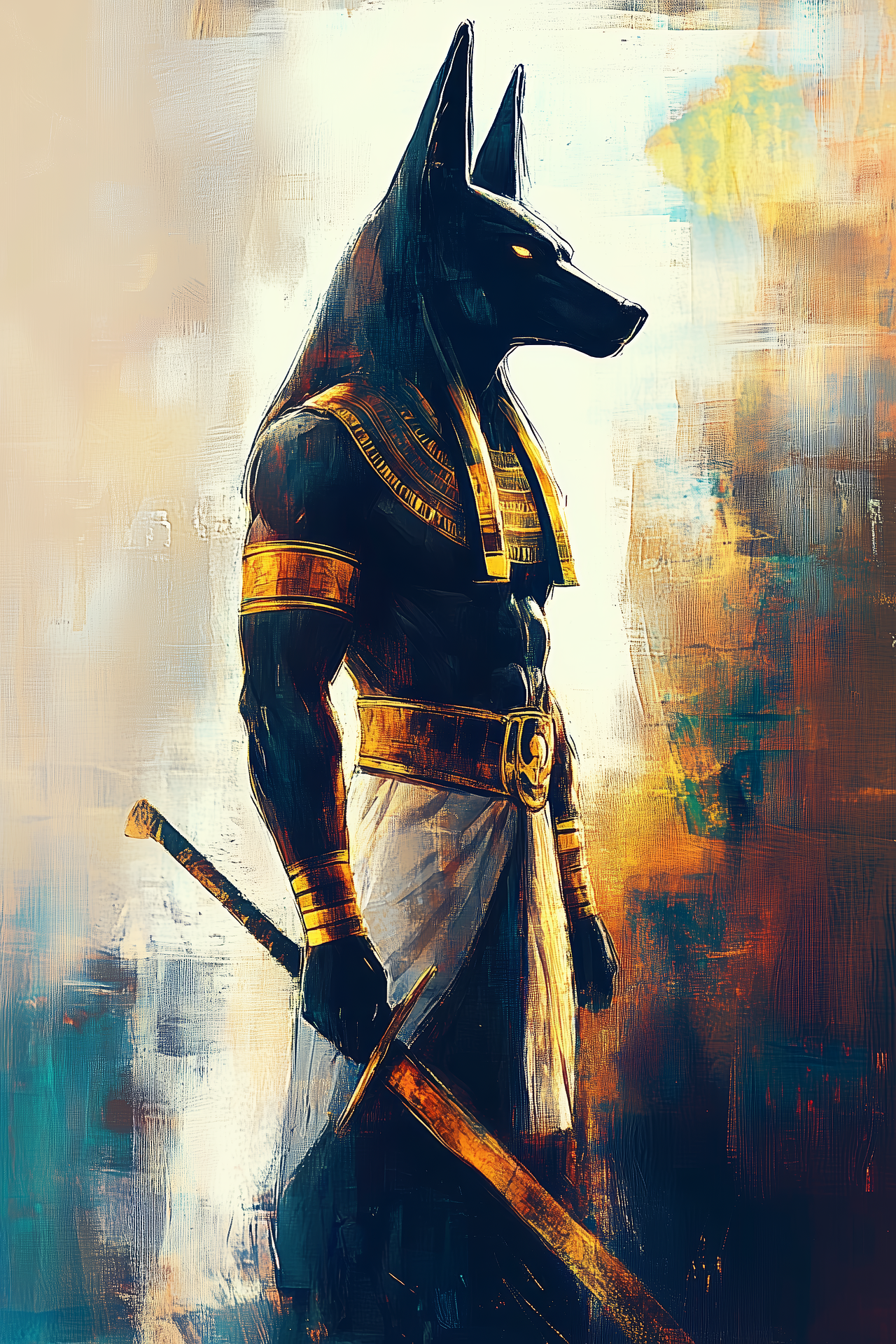
Anubis was the jackal-associated god connected with embalming, funerary protection, and the care of the dead.
Ancient Egyptians placed great importance on preserving the body after death because they believed the body and other aspects of a person's existence played a role in the afterlife.
Anubis was associated with the rituals that prepared the deceased for burial. He was also depicted in scenes involving the weighing of the heart, where the heart of the deceased was compared with the feather of Ma'at, the principle of truth and justice.
If the heart proved worthy, the deceased could proceed toward a blessed afterlife. If not, it faced a different fate.
Images of Anubis appear in funerary texts, tomb paintings, and religious objects. His dark coloration was often associated with embalming and the fertile soil that symbolized regeneration.
Where to discover his story: The Valley of the Kings and other funerary sites around Luxor, where royal tombs preserve vivid scenes of the ancient Egyptian afterlife.
7. Thoth: The God of Wisdom, Writing, and Knowledge
Thoth was associated with writing, wisdom, knowledge, calculation, and the measurement of time. He was commonly represented as an ibis-headed man or, in some depictions, as a baboon.
According to Egyptian religious traditions, Thoth played an important role in maintaining cosmic order and recording the results of the judgment of the dead. His connection with writing made him a patron of scribes and scholars.
In a civilization that depended on record keeping, administration, astronomy, and religious texts, Thoth represented the intellectual power needed to preserve knowledge.
The ancient city of Hermopolis, in Middle Egypt, was an important center of his worship. His influence can also be explored through inscriptions and religious scenes in temples and tombs throughout Egypt.
Where to discover his story: Hermopolis and the many Egyptian temples and tombs featuring scenes of scribes, sacred writing, and divine judgment.
8. Sekhmet: The Powerful Lioness Goddess
Sekhmet was a fierce goddess associated with war, royal power, disease, and healing. She was usually represented as a lioness or a woman with a lioness's head.
Her myths reveal a complex character. She could be a destructive force capable of bringing illness and devastation, but she was also connected with protection and healing.
One famous myth describes the Eye of Ra taking the form of a powerful lioness to punish humanity. The story explains the dangerous side of divine power and the need to restore balance when destruction threatens to go too far.
Sekhmet was particularly associated with the pharaoh's military strength and the protection of the kingdom.
Numerous statues of Sekhmet were commissioned during the reign of Amenhotep III, many of which have survived in museums and archaeological collections.
Where to discover her story: Luxor's temple heritage and museum collections, where visitors can explore the powerful imagery of lioness deities and royal protection.
9. Ptah: The Creator God of Craftsmen and Builders
Ptah was a major creator deity whose principal center of worship was Memphis, one of ancient Egypt's most important political and religious cities.
He was associated with craftsmanship, architecture, sculpture, and the creative power behind the formation of the world. In certain theological traditions, Ptah created through the power of his heart and tongue, emphasizing thought and speech as instruments of creation.
This association made Ptah especially significant to artisans and craftsmen who produced statues, temple decorations, and monumental structures.
Ptah is often depicted as a mummiform figure wearing a close-fitting cap and holding a staff combining symbols of stability, life, and power.
His importance illustrates how ancient Egyptian religion connected divine authority with the practical skills needed to build and maintain a civilization.
Where to discover his story: Memphis, near modern Mit Rahina, where archaeological remains and museum displays help explain the city's importance in Egyptian history.
10. Ma'at: The Goddess of Truth, Justice, and Cosmic Order
Ma'at represented truth, justice, balance, and the proper order of the universe. Her principles were essential to Egyptian ideas about good government, ethical behavior, and the relationship between humanity and the gods.
She was commonly represented as a woman wearing an ostrich feather on her head. The feather became an especially important symbol in funerary judgment.
In the famous scene of the weighing of the heart, the heart of the deceased was weighed against the feather of Ma'at. The image represented the question of whether a person had lived in accordance with truth and moral order.
The pharaoh was expected to uphold Ma'at by governing responsibly, maintaining justice, performing religious duties, and protecting Egypt from disorder.
Unlike deities primarily connected with a single temple or region, Ma'at expressed a fundamental principle that influenced Egyptian religion, politics, and society.
Where to discover her story: Tombs in the Valley of the Kings, especially through funerary texts and judgment scenes that explain ancient Egyptian beliefs about the afterlife.
How Egyptian Gods and Goddesses Shaped the Temples
Ancient Egyptian temples were more than places where people gathered to pray. They were considered sacred homes of the gods, where priests performed rituals, presented offerings, and maintained the relationship between the human and divine worlds.
The architecture and decoration of each temple reflected the deity it honored, the religious traditions of its location, and the authority of the rulers who supported its construction.
At Karnak, enormous halls and sanctuaries celebrated Amun-Ra and the religious power of Thebes. At Edfu, inscriptions and reliefs preserved stories associated with Horus. At Dendera, the imagery of Hathor expressed music, protection, and celestial symbolism. At Philae, the worship of Isis connected divine motherhood with the promise of renewal.
The temples also reveal that ancient Egyptian religion changed over time. Gods could become associated with one another, local traditions could gain national importance, and religious practices could evolve as rulers and communities changed.
Understanding these stories allows visitors to appreciate the temples not merely as architectural wonders but as living records of ancient Egyptian thought.
The Best Temples to Visit to Discover Egyptian Mythology
If you want to explore the stories of Egypt's gods and goddesses in person, consider adding these destinations to your itinerary:
- Karnak Temple, Luxor: Discover the religious importance of Amun-Ra and the traditions of ancient Thebes.
- Luxor Temple, Luxor: Explore royal symbolism and the ceremonies associated with kingship.
- Temple of Hatshepsut, West Bank of Luxor: Learn about royal authority, divine legitimacy, and the reign of a remarkable female pharaoh.
- Valley of the Kings, Luxor: Discover the richly illustrated funerary traditions of Egypt's New Kingdom rulers.
- Dendera Temple, near Qena: Admire the sanctuary dedicated to Hathor and its remarkable astronomical decorations.
- Abydos, Sohag Governorate: Explore one of the most important centers of Osiris worship and the Temple of Seti I.
- Edfu Temple, between Luxor and Aswan: Discover the mythology of Horus in one of Egypt's best-preserved temples.
- Philae Temple, Aswan: Experience the beautiful island sanctuary dedicated to Isis.
A well-planned trip can combine several of these destinations, especially Luxor's East and West Banks with a Nile cruise between Luxor and Aswan.
Frequently Asked Questions About Egyptian Gods and Goddesses
Who was the most powerful god in ancient Egypt?
There was no single answer for every period of Egyptian history. Amun-Ra became especially influential during the New Kingdom, while other gods held major roles in different cities, eras, and religious traditions.
Who were the most important Egyptian gods and goddesses?
Important deities included Amun-Ra, Isis, Osiris, Horus, Hathor, Anubis, Thoth, Ptah, Sekhmet, and Ma'at. Their roles covered creation, kingship, protection, wisdom, healing, justice, and the afterlife.
Why did ancient Egyptians build temples for their gods?
Temples were sacred places where priests performed rituals, presented offerings, and maintained the relationship between the gods and the Egyptian world. Pharaohs also built and expanded temples to demonstrate their devotion and legitimate authority.
Which temple is best for learning about Egyptian mythology?
Karnak Temple is an excellent starting point because of its scale and historical importance. Edfu is particularly valuable for the mythology of Horus, Dendera for Hathor, and Philae for Isis.
Did all ancient Egyptians worship the same gods?
No. Religious beliefs varied by region and period. Certain deities became nationally important, while others remained closely associated with particular cities, temples, or local traditions.
Can I visit the most important Egyptian temples on one trip?
Yes, but visiting every major site requires careful planning. A trip focused on Luxor, Dendera, Edfu, Aswan, and Philae can provide an excellent introduction to Egyptian mythology. Abydos can be added if you have additional time.
Discover the Stories Behind Ancient Egypt
The gods and goddesses of ancient Egypt continue to fascinate travelers because their stories connect monumental architecture with the deepest questions of human life: creation, love, death, justice, renewal, and the search for eternity.
From the towering columns of Karnak to the elegant sanctuary of Philae, every temple offers an opportunity to discover another chapter of Egypt's extraordinary past.
If you are planning a visit, consider exploring these monuments with a knowledgeable local guide who can explain the symbolism, mythology, and historical context behind the scenes carved into their walls.
Explore Egypt's ancient wonders and discover the stories that make every temple unforgettable.
Comments
Leave a comment