Karnak Temple: What to See and How to Visit
Karnak Temple is one of the most remarkable ancient sites in Luxor and one of the essential stops for anyone interested in Egyptian history. Located on the East Bank of the Nile, the Karnak complex developed over many centuries as successive rulers expanded, rebuilt, and decorated its temples, pylons, chapels, and monuments. For travelers planning a Luxor tour, Karnak is especially valuable because it combines monumental architecture, religious history, enormous columns, obelisks, inscriptions, and open spaces that reveal the scale of ancient Thebes.
What Is Karnak Temple?
Karnak is not simply one temple. It is a vast religious complex centered on the Precinct of Amun-Re, with additional areas associated with other deities. Ancient Thebes, modern Luxor, was an important religious and political center, and Karnak remained an important place of worship for centuries.
The complex contains monuments from different periods of ancient Egyptian history. This means that walking through Karnak is almost like traveling through a long architectural timeline, with successive pharaohs adding their own structures and decorations.
The Avenue of Sphinxes
The approach to Karnak includes an impressive avenue associated with sphinx statues. The entrance leads visitors toward the monumental First Pylon and the main temple complex.
This area is a good place to begin understanding the scale of Karnak before entering the enormous courtyards and halls beyond it.
The Great Hypostyle Hall
The Great Hypostyle Hall is the highlight for many visitors. It contains 134 enormous sandstone columns, with twelve central columns reaching approximately 21 meters high. The hall was begun under Seti I and completed and decorated under Ramesses II.
Look closely at the columns and surrounding walls for hieroglyphic inscriptions and reliefs depicting kings, deities, rituals, and historical events. The scale of the hall is difficult to appreciate from photographs, making it one of the most memorable parts of a Karnak visit.
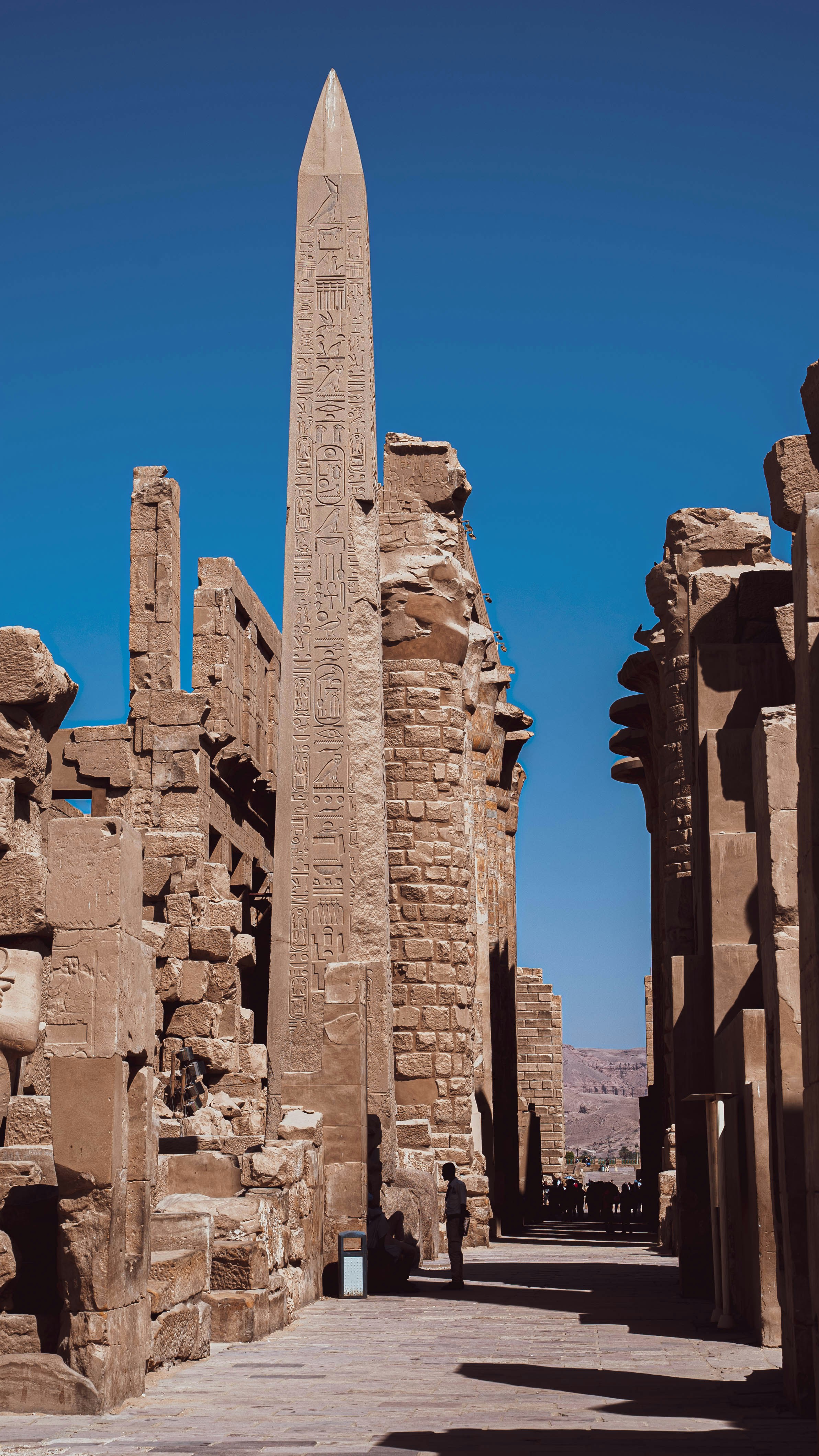
Hatshepsut's Obelisk
Another important feature is the large obelisk erected by Queen Hatshepsut. The Ministry of Tourism and Antiquities states that the obelisk stands nearly 30 meters high and weighs more than 300 tons.
Its polished granite surface and inscriptions demonstrate the engineering and artistic skills of ancient Egyptian builders.
The Sacred Lake
The Sacred Lake is another interesting feature of the Karnak complex. It was connected with the ritual activities of the temple and the purification of priests. Today, it provides a quieter area where visitors can appreciate the size and layout of the surrounding complex.
The Open-Air Museum
The Karnak site also includes an Open-Air Museum, where reconstructed and preserved architectural elements provide additional insight into the development of the complex. The current official ticket information includes access to the Open-Air Museum with the standard foreign visitor ticket.
How to Visit Karnak Temple
Karnak is located on Luxor's East Bank and is easy to combine with other attractions in the city.
A popular itinerary is to visit Karnak Temple in the morning, take a break for lunch, and then continue to Luxor Temple. This creates a convenient East Bank sightseeing day.
If you are visiting Luxor's West Bank on another day, you can dedicate the morning or afternoon to Karnak and combine it with other East Bank experiences.
How Much Time Should You Allow?
Allow at least two hours if you want to see the principal areas without rushing. Travelers who enjoy photography, archaeology, and detailed exploration can easily spend longer.
Because the complex is extensive, comfortable walking shoes, water, sun protection, and lightweight clothing are useful.
What Is the Best Time to Visit Karnak?
An early start can make outdoor sightseeing more comfortable, particularly during warmer periods. Visiting earlier also gives you more time to explore the complex before the strongest heat of the day.
Always check the current official opening hours and ticket information before your visit, as schedules and prices can change. The Egyptian Ministry of Tourism and Antiquities currently lists Karnak's regular opening period as 6:00 AM to 5:00 PM and publishes current ticket information on its official monument page.
Karnak Temple and Luxor Temple
Karnak and Luxor Temple are both located on Luxor's East Bank, but they offer different experiences.
Karnak is a much larger religious complex with monumental halls, pylons, obelisks, and multiple areas developed over centuries. Luxor Temple is a more compact monumental temple in the center of modern Luxor.
Visiting both provides a broader understanding of ancient Thebes and its religious traditions.
Why Visit Karnak Temple?
Karnak is more than a collection of ancient ruins. Its enormous columns, inscriptions, obelisks, courtyards, and sacred spaces provide a powerful introduction to the architectural and religious traditions of ancient Egypt.
Whether you are visiting Luxor for one day or staying several nights, Karnak Temple should be an important part of your itinerary.
Plan Your Karnak Temple Visit
A private Luxor East Bank tour can combine Karnak Temple with Luxor Temple and other experiences according to your schedule. Travelers interested in ancient Egyptian history can also combine their East Bank visit with a separate West Bank tour covering the Valley of the Kings, Hatshepsut Temple, and the Colossi of Memnon.
Comments
Leave a comment