Luxor East Bank vs West Bank: What to See
When planning a trip to Luxor, one of the most common questions is: Should you visit the East Bank or the West Bank? The good news is that you do not necessarily have to choose. Both sides of the Nile offer remarkable ancient Egyptian monuments, but they provide very different sightseeing experiences.
The East Bank of Luxor is centered around major temples and the ancient religious heart of Thebes, while the West Bank is famous for royal tombs, mortuary temples, and archaeological sites surrounded by the Theban mountains.
Understanding the difference between the two sides can help you organize your Luxor itinerary and make the most of your time in Egypt.
What Is Luxor's East Bank?
The East Bank is the livelier side of modern Luxor. It contains the city center, hotels, restaurants, shops, the Nile Corniche, and several important ancient monuments.
The main archaeological attractions include Karnak Temple and Luxor Temple.
Karnak Temple
Karnak is one of the largest religious complexes in ancient Egypt. Its enormous pylons, courtyards, columns, obelisks, and inscriptions demonstrate the scale of ancient Egyptian religious architecture.
The Great Hypostyle Hall is one of its most impressive areas, featuring massive columns covered with inscriptions and reliefs.
Allow plenty of time to explore Karnak because the complex is extensive.
Luxor Temple
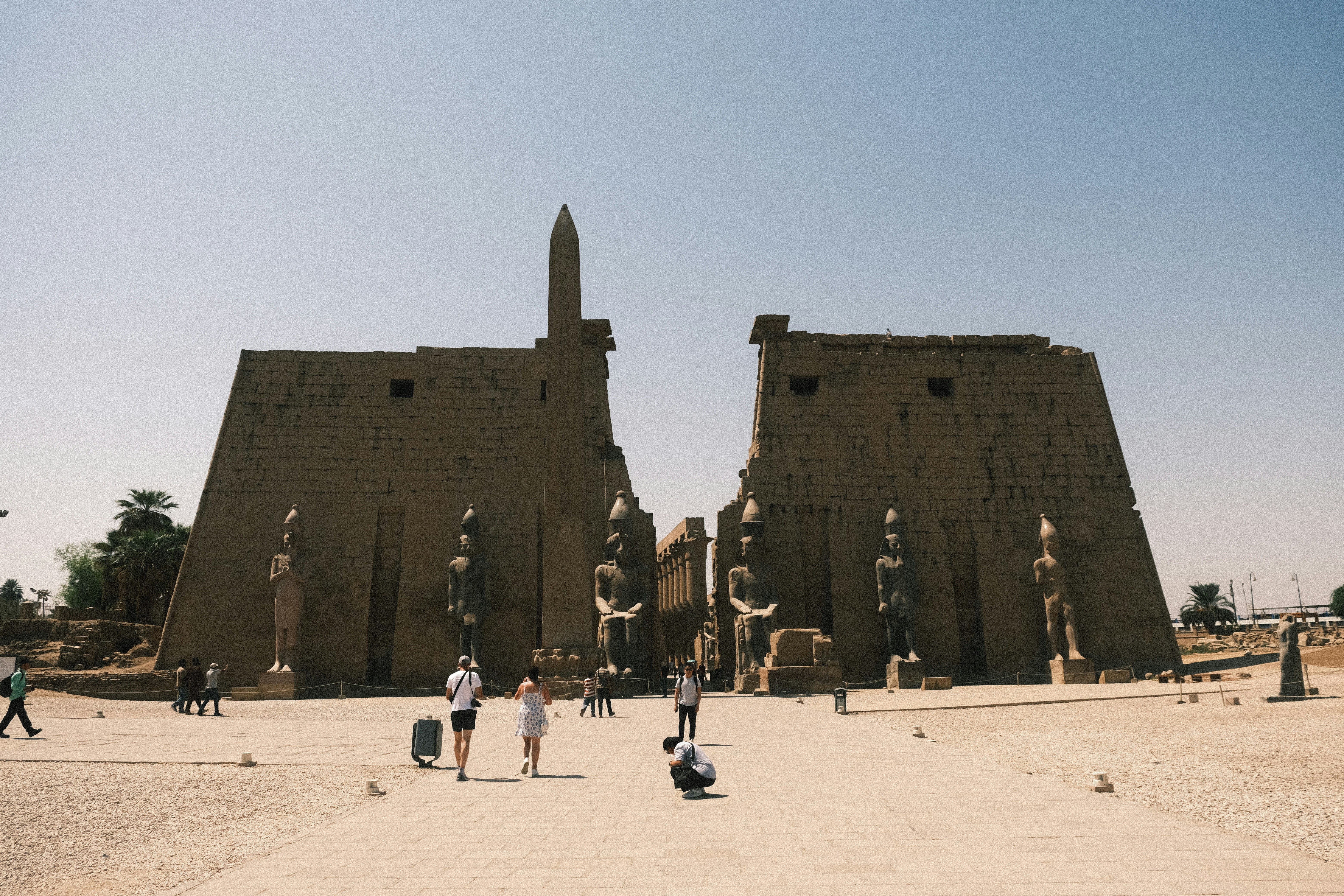
Located in the center of modern Luxor, Luxor Temple provides a fascinating contrast between ancient monuments and contemporary Egyptian life.
The temple contains monumental statues, columns, courtyards, and reliefs associated with several ancient Egyptian rulers. It was closely connected with the ancient religious traditions of Thebes and the Opet Festival.
Luxor Temple is particularly convenient to visit because of its central location.
Other East Bank Experiences
The East Bank is also a good place to enjoy:
A sunset felucca sailing
Local restaurants and Egyptian cuisine
The Nile Corniche
Traditional markets
Evening sightseeing
Local shopping
For travelers with limited time, Karnak and Luxor Temple can be combined into an efficient Luxor East Bank tour.
What Is Luxor's West Bank?
The West Bank is best known for its ancient necropolis and monumental funerary sites. The landscape changes dramatically as you move from the green Nile Valley toward the desert and limestone mountains.
This side of Luxor is home to some of Egypt's most famous archaeological sites.
Valley of the Kings
The Valley of the Kings is perhaps the most famous attraction on Luxor's West Bank.
The valley contains numerous royal tombs carved into the mountains. Their corridors and chambers are decorated with hieroglyphs, religious scenes, and colorful artwork relating to ancient Egyptian beliefs about death and the afterlife.
The tombs available to visitors can vary, so it is important to check current ticket information when planning your visit.
Hatshepsut Temple
The Temple of Hatshepsut at Deir el-Bahari is another major West Bank attraction.
Built for Queen Hatshepsut, the temple features three large terraces rising against dramatic limestone cliffs. Its architecture and location make it one of the most photographed monuments in Luxor.
Colossi of Memnon
The Colossi of Memnon are two enormous stone statues that once stood at the entrance to a much larger mortuary temple associated with Pharaoh Amenhotep III.
They are an easy addition to a West Bank itinerary and make an excellent photography stop.
Medinet Habu
Travelers interested in going beyond the classic attractions can visit Medinet Habu, the impressive mortuary temple of Ramesses III.
The complex is known for its substantial walls and detailed reliefs depicting religious and historical scenes.
Valley of the Queens
The Valley of the Queens contains tombs associated with queens, princes, and members of the royal family.
The area is especially known for the beautifully decorated tomb of Queen Nefertari, although access and ticket arrangements may vary.
Deir el-Medina
At Deir el-Medina, visitors can learn about the community of workers who constructed and decorated many of the royal tombs.
Unlike the monumental temples and royal burial sites, Deir el-Medina provides insight into everyday life, housing, occupations, and community organization in ancient Egypt.
Luxor East Bank vs West Bank: Main Difference
The simplest way to understand the difference is:
East Bank = Temples and city life
West Bank = Tombs, mortuary temples and archaeological landscapes
This distinction reflects the historical development of ancient Thebes, although both areas contain religious and funerary monuments.
East Bank
West Bank
Karnak Temple
Valley of the Kings
Luxor Temple
Hatshepsut Temple
City center
Colossi of Memnon
Nile Corniche
Medinet Habu
Restaurants & shops
Valley of the Queens
Felucca experiences
Deir el-Medina
Evening activities
Ancient necropolis
which side should I visit first
If you are visiting Luxor for two days, a practical approach is to dedicate one day to each bank.
Day 1 — West Bank
Start early with:
Valley of the Kings
Hatshepsut Temple
Colossi of Memnon
Medinet Habu or another archaeological site
Day 2 — East Bank
Continue with:
Karnak Temple
Lunch
Luxor Temple
Felucca sunset sailing
This arrangement gives you time to explore the main highlights without trying to cover too much in a single day.
What If You Only Have One Day?
If you only have one day in Luxor, you can still experience highlights from both sides.
A private itinerary could include the Valley of the Kings, Hatshepsut Temple, and Colossi of Memnon in the morning, followed by lunch and Karnak Temple and Luxor Temple later in the day.
The exact schedule depends on opening hours, transportation, and the time available.
Travelers arriving or departing on a Nile cruise should also consider their cruise schedule when planning sightseeing.
How Many Days Do You Need in Luxor?
For a first visit, two full days provides a comfortable starting point.
One day can focus on the West Bank and another on the East Bank. With three or more days, you can add experiences such as:
Hot-air balloon ride
Felucca sunset sailing
Dendera and Abydos
Edfu and Kom Ombo
Valley of the Queens
Deir el-Medina
Medinet Habu
This allows you to experience both famous monuments and less-visited archaeological sites.
Best Time to Explore Luxor
Luxor can be visited throughout the year, but outdoor sightseeing is generally more comfortable during the cooler months.
During warmer periods, starting early is particularly useful. The West Bank involves considerable walking, and many archaeological sites have limited shade.
Wear comfortable walking shoes, carry water, and use sun protection.
Should You Choose East Bank or West Bank?
For most visitors, there is no need to choose only one. The East Bank and West Bank complement each other.
The East Bank introduces you to the monumental temples of ancient Thebes, while the West Bank reveals the royal tombs and mortuary landscape.
Together, they provide a much broader understanding of Luxor's history.
Plan Your Luxor Tour
A private Luxor itinerary allows you to organize the East and West Bank according to your interests and available time.
For first-time visitors, a Luxor West Bank tour can cover the Valley of the Kings, Hatshepsut Temple, and Colossi of Memnon, while an East Bank tour can focus on Karnak and Luxor temples.
You can also add a sunrise hot-air balloon ride, sunset felucca sailing, or an excursion to Dendera and Abydos to create a more complete Luxor experience.
Comments
Leave a comment