Luxor Temple: History & Travel Guide
Luxor Temple is one of the most impressive ancient monuments in modern Luxor, Egypt. Located on the East Bank of the Nile, this beautifully preserved temple stands in the heart of the city and offers visitors an opportunity to experience ancient Egyptian architecture alongside the atmosphere of modern Luxor.
Unlike many ancient Egyptian temples that were dedicated to a single deity, Luxor Temple had an important connection with the rejuvenation of kingship and the religious celebrations of ancient Thebes. Its location, monumental entrance, statues, columns, and detailed reliefs make it one of the essential places to visit in Luxor.
A Brief History of Luxor Temple
Luxor Temple was developed primarily during the New Kingdom, although different rulers contributed to the monument over time. Amenhotep III was responsible for major construction, while Ramesses II added important elements including the monumental entrance and statues.
The temple was closely connected with the ancient religious traditions of Thebes. It was associated with the annual Opet Festival, during which the sacred images of the Theban Triad were ceremonially connected with Karnak and Luxor Temple.
The monument therefore played an important role in the religious and royal life of ancient Egypt.
The First Pylon
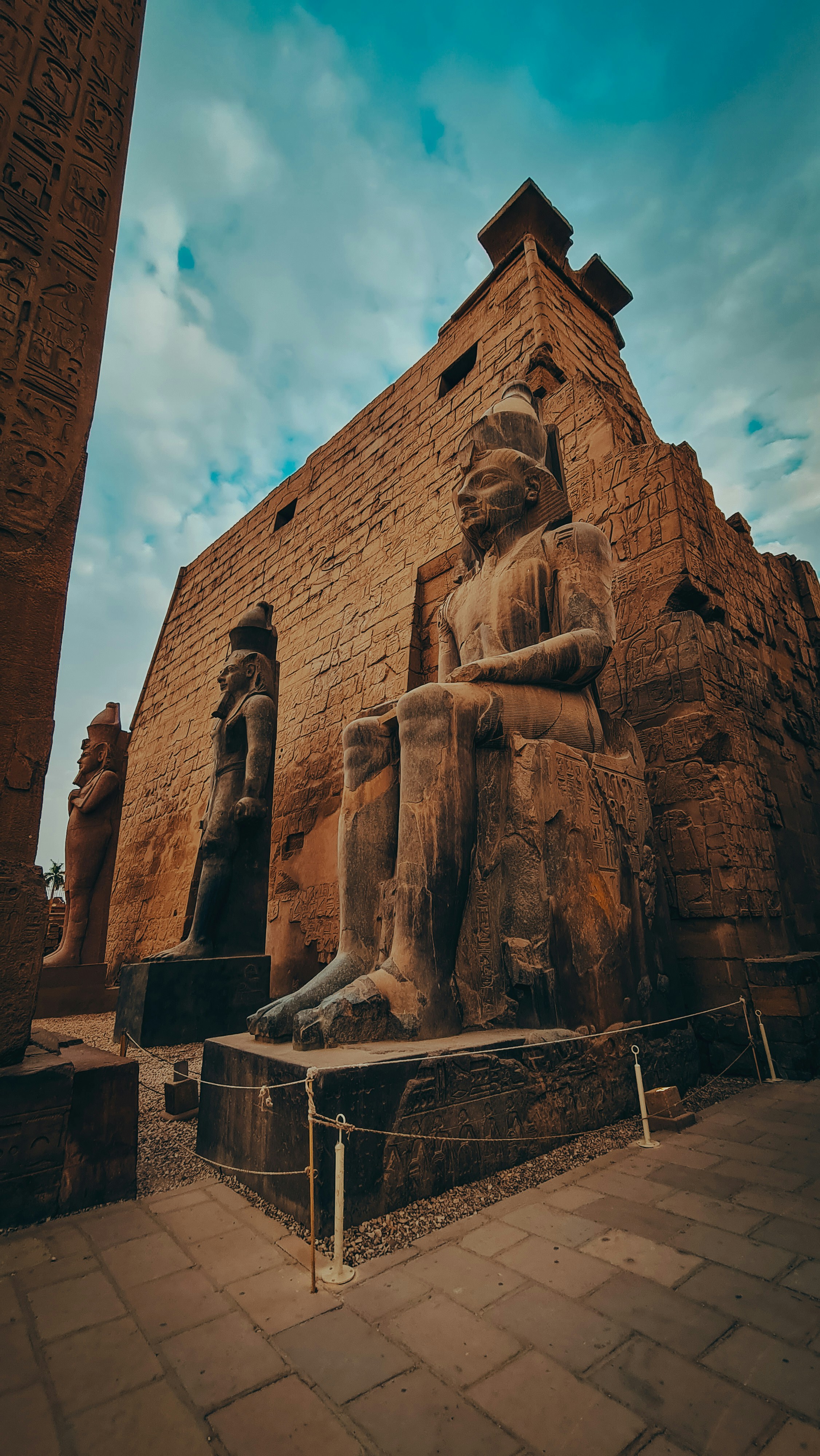
The monumental entrance is one of the first features visitors encounter. Known as the First Pylon, it was constructed during the reign of Ramesses II.
Originally, the entrance was decorated with monumental statues and obelisks. One of the famous Luxor obelisks remains in front of the temple, while its companion now stands in Paris.
The enormous scale of the pylon gives visitors an immediate impression of the power and architectural ambition of ancient Egypt.
Statues of Ramesses II
Large seated statues of Ramesses II stand near the entrance. These monumental figures are among the most recognizable features of Luxor Temple.
The statues are decorated with royal imagery and inscriptions that reflect the importance of the pharaoh in ancient Egyptian society.
Take time to examine the details rather than simply photographing the entrance. Your guide can explain the symbolism behind the royal poses and inscriptions.
The Great Court of Ramesses II
Beyond the entrance is the spacious Great Court of Ramesses II.
The courtyard is surrounded by columns and statues and provides a sense of the monumental scale of the temple. Ramesses II incorporated numerous representations of himself into the complex, reinforcing the connection between the temple, kingship, and religious tradition.
This is also one of the most photogenic areas of the temple.
The Colonnade of Amenhotep III
One of the highlights of Luxor Temple is the Colonnade of Amenhotep III, consisting of massive columns decorated with inscriptions and reliefs.
The colonnade leads visitors toward the inner areas of the temple and creates a strong architectural perspective.
The walls and columns provide opportunities to study ancient Egyptian artistic traditions, including scenes connected with religious ceremonies and royal activities.
The Birth Colonnade
The temple also contains reliefs associated with the divine birth of Amenhotep III. These scenes were used to emphasize the pharaoh's divine legitimacy and connection with the gods.
This part of the temple is particularly interesting for visitors who want to understand how ancient Egyptian religion and royal authority were connected.
The Sanctuary
Further inside the temple is the sanctuary area, where religious rituals associated with the temple took place.
The inner sections are generally more intimate than the enormous entrance and courtyards. The transition from the monumental exterior toward the sanctuary demonstrates how ancient Egyptian temple architecture could move from public ceremonial spaces toward more restricted sacred areas.
Luxor Temple and the Opet Festival
The Opet Festival was an important religious celebration in ancient Thebes.
During the festival, sacred images associated with the Theban gods were ceremonially transported between Karnak and Luxor Temple. The celebration was connected with renewal, kingship, and the relationship between the ruler and the gods.
Understanding the Opet Festival makes a visit to Luxor Temple more meaningful because the monument was not simply an architectural achievement—it formed part of a larger religious landscape.
Luxor Temple and Karnak Temple
One of the best ways to explore Luxor's East Bank is to visit Karnak Temple and Luxor Temple together.
Karnak is a vast religious complex with monumental pylons, the Great Hypostyle Hall, obelisks, and numerous structures developed over many centuries.
Luxor Temple is smaller and located closer to the modern city center, but its architecture and historical significance make it equally valuable to include in a Luxor itinerary.
The two sites were connected in antiquity by the Avenue of Sphinxes, reinforcing their relationship within the religious landscape of ancient Thebes.
Visiting Luxor Temple
Luxor Temple is conveniently located in central Luxor, making it relatively easy to include in a sightseeing itinerary.
For a more comfortable experience, consider visiting during the cooler parts of the day. The temple can also be particularly atmospheric later in the day when the lighting changes across the columns and statues.
Always check current opening hours and ticket information before your visit because schedules and admission arrangements can change.
How Much Time Do You Need?
Most visitors should allow approximately one to two hours to explore Luxor Temple comfortably.
History enthusiasts and photographers may want additional time to examine the reliefs, statues, columns, and architectural details.
If you are visiting with a guide, the experience can be more informative because many of the stories represented in the temple are difficult to understand without historical context.
Best Way to Visit Luxor Temple
A practical East Bank itinerary can combine:
Karnak Temple
Lunch at a local restaurant
Luxor Temple
Optional felucca sunset sailing
This allows you to experience both major East Bank temples while also leaving time for a relaxing Nile experience.
Travelers staying longer in Luxor can dedicate another day to the West Bank and explore the Valley of the Kings, Hatshepsut Temple, Colossi of Memnon, and other archaeological sites.
Why Visit Luxor Temple?
Luxor Temple offers a unique combination of history, architecture, and location. Unlike remote archaeological sites surrounded mainly by desert, the temple stands directly within modern Luxor, creating a fascinating contrast between ancient monuments and contemporary Egyptian life.
For first-time visitors, it is one of the most accessible ways to experience the grandeur of ancient Thebes.
Plan Your Luxor Experience
If you are planning a trip to Luxor, consider adding Luxor Temple to a private East Bank tour. Combining it with Karnak Temple creates a comprehensive introduction to the ancient religious center of Thebes.
You can also connect your Luxor Temple visit with a West Bank tour, Nile cruise, hot-air balloon ride, or sunset felucca sailing to create a personalized Egypt travel experience.
Comments
Leave a comment